Jagjit Singh Deewar-O-Dar Pe Naksh Banaane Ka Hai Junoon Ghazal Lyrics Meaning (English Translation) | Abhishek (1987) | दीवार-ओ-दर पे नक़्श बनाने का है जुनून


Jagjit Singh’s Deewar-O-Dar Pe Naksh Banaane Ka Hai Junoon Ghazal Lyrics in Hindi & English with meaning (Translation). The writer of the Ghazal is Chander Oberoi and it’s from the movie Abhishek (1987) starring Aditya Pancholi & Archana Puran Singh.

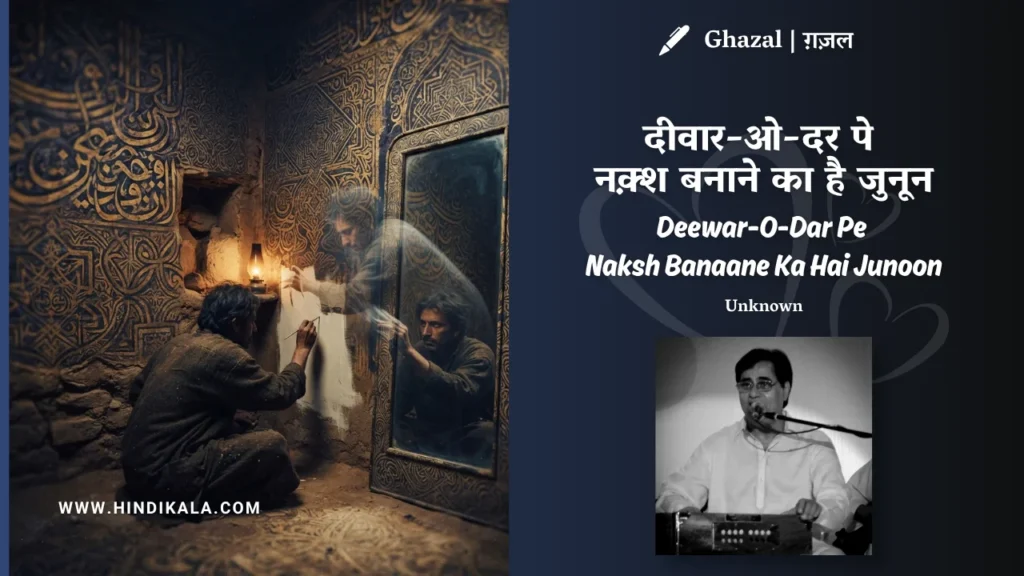
| Ghazal | Deewar-O-Dar Pe Naksh Banaane Ka Hai Junoon |
| Movie | Abhishek (1987) |
| Singer | Jagjit Singh, Dilraj Kaur, Kirti Anuraag |
| Music | Kirti Anuraag |
| Lyricist | Chander Oberoi |
| Actors | Aditya Pancholi, Archana Puran Singh |
यह ग़ज़ल, जुनून की एक के बाद एक झलकियों की माला है। शायर को दीवार-ओ-दर पर नक़्श बनाने का जुनून है, और अपने महबूब को आज उसी से चुरा लेने का भी। उसे दुनिया की भीड़ से हट जाने और हर आग में तपने का जुनून है। मौत और ज़िंदगी एक ही बार मिलती हैं, इसलिए वह दोनों को शान से निभाना चाहता है। अज़ाब बनी ज़िंदगी में भी वह सिमट जाने और वक़्त को मुट्ठी में छुपाने का जुनून रखता है। जगजीत सिंह की आवाज़ इसे गहराई देती है।
दीवार-ओ-दर पे नक़्श बनाने का है जुनून ग़ज़ल हिन्दी लिरिक्स
दीवार-ओ-दर पे नक़्श बनाने का है जुनून
ख़ुद तुझको आज तुझसे चुराने का है जुनून
दुनिया के भीड़ से हट जाने का है जुनून
हर आग में यह जिस्म तपाने का है जुनून
मौत और ज़िन्दगी तो बस मिलती है एक बार
दोनों को शान से ही निभाने का है जुनून
कल तक जो ज़िन्दगी थी बनी आज इक अज़ाब
अब इस अज़ाब में भी सिमट जाने का है जुनून
(अज़ाब = दुख, कष्ट, संकट)
Abhishek (1987) Movie Ghazal Filmed on Aditya Pancholi & Archana Puran singh
देखो न रूठ जाए कहीं वक़्त हमनशीं
मुट्ठी में वक़्त को भी छुपाने का है जुनून
चलता रहेगा वक़्त का पहिया ऐ जानेमन
दाँव पे अपनी जान लगाने का है जुनून
इस ग़ज़ल का रदीफ़ “का है जुनून” हर शेर में जुनून का एक नया रूप दिखाता है: कला का जुनून, महबूब को पाने का जुनून, भीड़ से अलग होने का जुनून, आग में तपने का जुनून, और वक़्त को क़ाबू में रखने का जुनून। “जुनून” उर्दू शायरी का एक पुराना और प्रिय विषय है, जिसमें आशिक़ की दीवानगी को शर्म की नहीं, गर्व की बात माना जाता है। तीसरे शेर में शान से जीने और मरने की बात इस जुनून को अनुशासन भी देती है, यानी यह बेहोशी नहीं, सोची-समझी बेपरवाही है। चौथे शेर में ज़िंदगी के अज़ाब बन जाने पर भी हार मानने की जगह उसमें सिमट जाने का हौसला दिखता है।

This ghazal is a string of glimpses of passion, one after another. The poet is possessed by the urge to carve marks on walls and doors, and to steal the beloved, today, even from herself. He is possessed by the urge to step out of the world’s crowd and to let this body burn in every fire. Life and death come only once, so he wants to live out both in style. Even in a life that has turned to torment, he has the passion to settle in and to hide Time itself in his fist. Jagjit Singh’s voice lends it depth.
Deewar-O-Dar Pe Naksh Banaane Ka Hai Junoon Ghazal Lyrics in English with Meaning (Translation)
Deewar-o-Dar Pe Naqsh Banane Ka Hai Junoon
Khud Tujhko Aaj Tujhse Churane Ka Hai Junoon
(I am possessed by the urge to carve marks on walls and doors,
To steal you away, today, even from yourself.)
Duniya Ke Bheed Se Hat Jane Ka Hai Junoon
Har Aag Mein Yeh Jism Tapane Ka Hai Junoon
(I am possessed by the urge to step out of the world’s crowd,
To let this body burn in every fire.)
Maut Aur Zindagi To Bas Milti Hai Ek Baar
Dono Ko Shaan Se Hi Nibhane Ka Hai Junoon
(Death and life come to us only once,
And I am possessed by the urge to live out both in style.)
Abhishek (1987) Movie Ghazal by Jagjit Singh
Kal Tak Jo Zindagi Thi Bani Aaj Ik Azaab
Ab Is Azaab Mein Bhi Simat Jane Ka Hai Junoon
(What was life till yesterday has become a torment today;
Now I am possessed by the urge to settle even into this torment.)
Dekho Na Rooth Jaye Kahin Waqt Hamnasheen
Mutthi Mein Waqt Ko Bhi Chhupane Ka Hai Junoon
(Take care, companion, lest Time grow offended,
For I have the passion to hide even Time in my fist.)
Chalta Rahega Waqt Ka Pahiya Ae Jaaneman
Daanv Pe Apni Jaan Lagane Ka Hai Junoon
(The wheel of Time will keep on turning, O beloved,
And I have the passion to stake my very life.)
The refrain “ka hai junoon” (“I have the passion for”) shows a new face of passion in each couplet: passion for art, for winning the beloved, for leaving the crowd, for burning in fire, and for holding Time in check. “Junoon” (frenzy) is an old and beloved theme in Urdu poetry, where the lover’s madness is a matter of pride, not shame. The third couplet’s talk of living and dying in style gives this passion discipline, so it is not abandon but a considered carelessness. In the fourth couplet, when life has turned to torment, the speaker shows the courage to settle into it rather than give up.
FAQs (Frequently Asked Questions)
Chander Oberoi
Jagjit Singh, Dilraj Kaur, Kirti Anuraag
Movie: Abhishek (1987)
You Might Also Like:
- Jagjit Singh Dekha To Mera Saaya Bhi Mujhse Juda Mila Ghazal Lyrics Meaning (English Translation) | Ayaz Jhansvi | देखा तो मेरा साया भी मुझ से जुदा मिला
- Jagjit Singh Deewar-O-Dar Pe Naksh Banaane Ka Hai Junoon Ghazal Lyrics Meaning (English Translation) | Abhishek (1987) | दीवार-ओ-दर पे नक़्श बनाने का है जुनून
- Jagjit Singh Darwaze Se Mat Lautao Lautakar Pachtaoge Ghazal Lyrics Meaning (English Translation) | Unknown | दरवाज़े से मत लौटाओ लौटाकर पछताओगे
- Jagjit Singh Dard Se Mera Daaman Bharde Ya Allah Ghazal Lyrics Meaning (English Translation) | Qateel Shifai | दर्द से मेरा दामन भर दे या अल्लाह | Lata Mangeshkar

- Jagjit Singh Dard Ke Phool Bhi Khilte Hain Bikhar Jaate Hain Ghazal Lyrics Meaning (English Translation) | Javed Akhtar | दर्द के फूल भी खिलते हैं बिखर जाते हैं