Jagjit Singh Dhal Gaya Aaftaab Ae Saaqi Ghazal Lyrics Meaning (English Translation) | Sudarshan Faakir | ढल गया आफ़ताब ऐ साक़ी


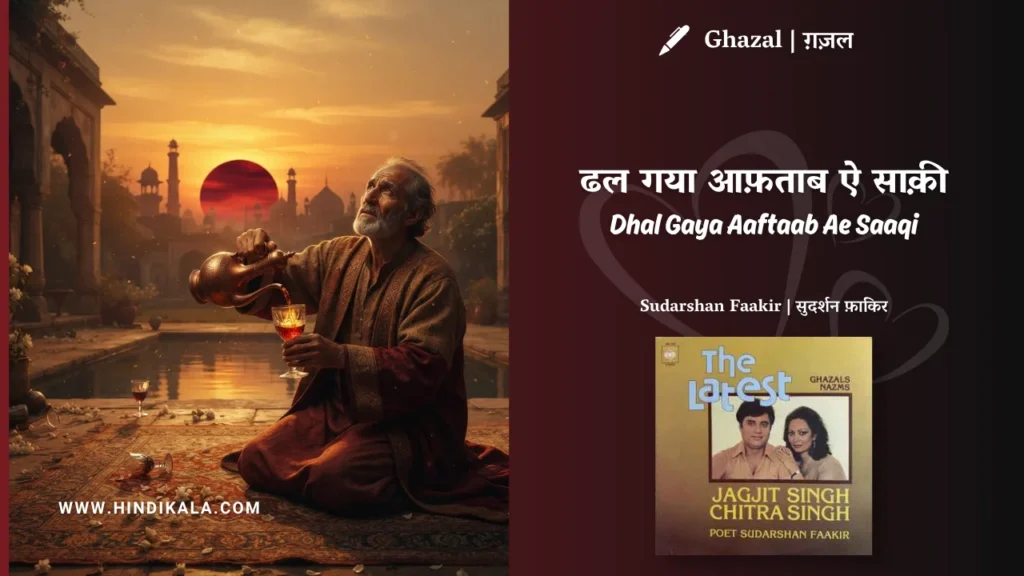
Jagjit Singh’s Dhal Gaya Aaftaab Ae Saaqi Ghazal Lyrics in Hindi & English with meaning (Translation). The Ghazal is written by Sudarshan Faakir and it’s from the album The Latest (1982).

| Ghazal | Dhal Gaya Aaftaab Ae Saaqi |
| Album | The Latest (1982) |
| Singer | Jagjit Singh |
| Music | Jagjit Singh |
| Lyricist | Sudarshan Faakir |
| Actors | NA |
सुदर्शन फ़ाकिर की यह ग़ज़ल साक़ी से मस्ती भरी गुज़ारिश है। आफ़ताब ढल गया है, इसलिए शायर साक़ी से शराब पिलाने को कहता है। वह चाहता है कि या तो सुराही उसके मुँह से लगा दी जाए, या साक़ी अपना नक़ाब उलट दे। ज़माना ख़राब है, इसलिए मैकदा छोड़कर कहाँ जाएँ। वह कहता है कि गुनाहगारों के जाम भरना भी एक सवाब है। आख़िर में वह आज और पीने की मोहलत माँगता है, क्योंकि हिसाब तो कल कर लिया जाएगा। जगजीत सिंह की आवाज़ इसे मदहोशी भरी रवानी देती है।
ढल गया आफ़ताब ऐ साक़ी ग़ज़ल हिन्दी लिरिक्स
ढल गया आफ़ताब ऐ साक़ी
ला पिला दे शराब ऐ साक़ी
(आफ़ताब = सूरज)
या सुराही लगा मेरे मुँह से
या उलट दे नक़ाब ऐ साक़ी
मैकदा छोड़ कर कहाँ जाएँ
है ज़माना ख़राब ऐ साक़ी
जाम भर दे गुनाहगारों के
ये भी है इक सवाब ऐ साक़ी
(सवाब = पुण्य)
आज पीने दे और पीने दे
कल करेंगे हिसाब ऐ साक़ी
La Pila De Sharab Ae Saqi Ghazal Hindi Lyrics
इस ग़ज़ल की ख़ूबी इसका रदीफ़ “ऐ साक़ी” है, जो पूरी ग़ज़ल को एक सीधी बातचीत बना देता है, मानो शायर सीधे साक़ी से कह रहा हो। चौथे शेर में चतुराई देखिए: गुनाहगारों के जाम भरना एक “सवाब” यानी पुण्य कहा गया है, जो मज़ाक़ भी है और दलील भी। आख़िरी शेर में “कल हिसाब करेंगे” का इशारा रोज़-ए-हश्र के हिसाब की ओर भी जाता है, यानी शायर आज की मस्ती के बदले कल की जवाबदेही टाल रहा है।
यह ग़ज़ल जगजीत और चित्रा के 1982 के एल्बम The Latest में है, जिसमें आठ ग़ज़लें हैं। यह जोड़ी का पहला एल्बम था जिसमें सिर्फ़ एक शायर, सुदर्शन फ़ाकिर, की शायरी थी, और यही एल्बम “वो काग़ज़ की कश्ती वो बारिश का पानी” की वजह से 1980 के दशक के सबसे ज़्यादा बिकने वाले एल्बमों में रहा। सुदर्शन फ़ाकिर (1934-2008) का असली नाम सुदर्शन कामरा था, और वे अपने पहले ही गीत पर फ़िल्मफ़ेयर पुरस्कार जीतने वाले पहले गीतकार माने जाते हैं।

This ghazal by Sudarshan Faakir is a lighthearted plea to the saqi (the cupbearer). The sun has set, so the poet asks the saqi to pour the wine. He wants either the flask pressed to his lips, or the saqi to lift her veil. The times are wicked, he says, so where can one go but the tavern? He adds that filling the cups of sinners is also a deed of merit. In the end he begs for leave to drink more today, since accounts can be settled tomorrow. Jagjit Singh’s voice lends it an intoxicated flow.
Dhal Gaya Aaftaab Ae Saaqi Ghazal Lyrics in English with Meaning (Translation)
Dhal Gaya Aaftab Ae Saqi
La Pila De Sharab Ae Saqi
(The sun has set, O Saqi;
Come, pour out the wine, O Saqi.)
Ya Surahi Laga Mere Munh Se
Ya Ulat De Naqab Ae Saqi
(Either press the flask to my lips,
Or lift your veil, O Saqi.)
Maikada Chhod Kar Kahan Jayen
Hai Zamana Kharab Ae Saqi
(Where can we go, leaving the tavern?
The times are wicked, O Saqi.)
Jaam Bhar De Gunahgaron Ke
Ye Bhi Hai Ik Sawab Ae Saqi
(Fill the cups of the sinners too;
That, too, is a deed of merit, O Saqi.)
Aaj Peene De Aur Peene De
Kal Karenge Hisab Ae Saqi
(Let me drink today, and drink some more;
We shall settle accounts tomorrow, O Saqi.)
La Pila De Sharab Ae Saqi Ghazal Lyrics English Translation
The beauty of this ghazal is the refrain “ae saqi”, which turns the whole ghazal into a direct conversation, as though the poet were speaking straight to the cupbearer. The fourth couplet is clever: filling the cups of sinners is called a “sawab”, a deed of merit, which is both a joke and an argument. In the last couplet, “kal karenge hisab” (“we will settle accounts tomorrow”) also hints at the reckoning of the Day of Judgement, so the poet is postponing tomorrow’s accountability in exchange for today’s revelry.
This ghazal is on the 1982 Jagjit and Chitra album The Latest, which has eight ghazals. It was the duo’s first album with the poetry of a single poet, Sudarshan Faakir, and it became one of the best-selling albums of the 1980s thanks to “Woh kaghaz ki kashti, woh baarish ka paani”. Sudarshan Faakir (1934-2008) was born Sudarshan Kamra, and is regarded as the first lyricist to win a Filmfare Award for his very first song.
FAQs (Frequently Asked Questions)
The Latest (1982)
You Might Also Like:
- Jagjit Singh Dhal Gaya Aaftaab Ae Saaqi Ghazal Lyrics Meaning (English Translation) | Sudarshan Faakir | ढल गया आफ़ताब ऐ साक़ी
- Jagjit Singh Dhai Din Na Jawani Naal Chaldi Kurti Mal Mal Di Lyrics Meaning (English Translation) | Indrajeet Hasanpuri | ढाई दिन ना जवानी नाल चलदी कुर्ती मलमल दी
- Jagjit Singh Dhadkan Dhadkan Dhadak Raha Hai Bas Ik Tero Naam Ghazal Lyrics Meaning (English Translation) | Nida Fazli | धड़कन धड़कन धड़क रहा है बस इक तेरो नाम
- Jagjit Singh Dekhna Jazb-E-Mohabbat Ka Asar Aaj Ki Raat Ghazal Lyrics Meaning (English Translation) | Majaz Lakhnawi | देखना जज़्ब-ए-मोहब्बत का असर आज की रात
- Jagjit Singh Dene Wale Mujhe Maujon Ki Ravani De De Ghazal Lyrics Meaning (English Translation) | Shadaab Lahori | देने वाले मुझे मौजों की रवानी दे दे