Jagjit Singh Bhool Jaana Use Bhula Dena Nazm Lyrics Meaning (English Translation) | Makarand Deshpande | भूल जाना उसे भुला देना


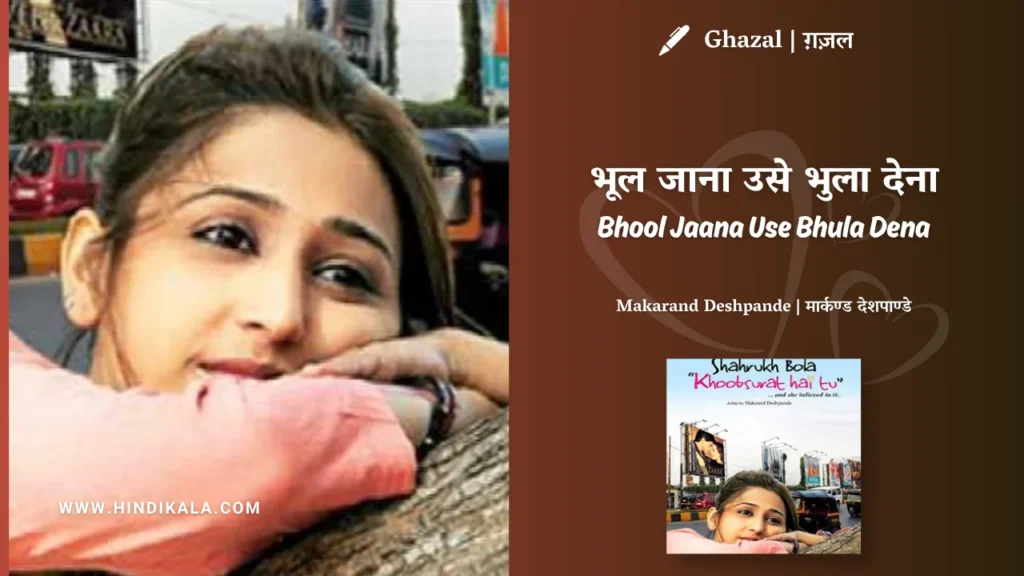
Jagjit Singh’s Bhool Jaana Use Bhula Dena Lyrics in Hindi & English with meaning (Translation). The Nazm is written by Makarand Deshpande and it’s from the movie Shahrukh Bola “Khoobsurat Hai Tu” (2010).

| Ghazal | Bhool Jaana Use Bhula Dena |
| Movie | Shahrukh Bola “Khoobsurat Hai Tu” (2010) |
| Singer | Jagjit Singh |
| Music | Jagjit Singh |
| Lyricist | Makarand Deshpande |
| Actors | Preetika Chawla |
यह नज़्म टूटे दिल की कड़वाहट और बेपरवाही की एक अँधेरी तस्वीर है। शायर ख़ुद से कहता है कि उसे भूल जाओ, उसकी याद तक दफ़ना दो। वह जाम को होंठों से लगाए रखने, जीवन को रात बनाए रखने और इस पल का कोई गाँव न होने की बात करता है। उसके लिए मंज़िल का कोई नाम-ओ-निशाँ नहीं, बस चलते जाना है। आख़िर में वह ग़म को मेहमान की तरह दिल में बसा लेता है और गलियों से अर्थी उठने देता है। जगजीत सिंह की आवाज़ इस सूनेपन को गहराई देती है।
भूल जाना उसे भुला देना नज़्म हिन्दी लिरिक्स
भूल जाना उसे भुला देना
याद तक उसकी दफना देना
होंठो से जाम लगाए रख
मदिरा की प्यास जगाए रख
रात गुज़रने वाली है
जीवन को रात बनाए रख
नारी तो नशे की है रानी
जो चाहे करे वो मनमानी
दिल की बात न कर देना
कहीं लुट जाए न जवानी
इस पल का कोई गाँव नहीं
इस धूप की छाँव नहीं
यूँ ही चलते जाना है
मंज़िल का नाम-ओ-निशाँ भी नहीं
दीवार पे सीलन रहने दो
पैरों तले काई जमने दो
मेहमाँ है ग़म तो दिल में बसा
गलियों से अर्थी उठने दो
इस नज़्म की बनावट दिलचस्प है। शुरू में दो पंक्तियों का आदेश आता है, फिर चार-चार पंक्तियों के बंद एक के बाद एक आते हैं, और हर बंद पिछले से ज़्यादा थका और सूना होता जाता है। शायर लगातार “रख”, “देना”, “दो” जैसे आदेशों में बात करता है, मानो वह दूसरों को नहीं, ख़ुद को समझा रहा हो। शब्द भी उर्दू के साथ हिंदी की ओर झुके हैं, जैसे “मदिरा”, “जीवन”, “गाँव”, “अर्थी”, जो इसे आम ग़ज़ल से अलग रंग देते हैं। तीसरे बंद की बातें कड़वे, टूटे दिल की आवाज़ हैं, किसी की सोच का बयान नहीं। मकरंद देशपांडे हिंदी रंगमंच और फ़िल्मों के जाने-माने अभिनेता, नाटककार और निर्देशक हैं, इसलिए उनका नाम शायर के रूप में कम सुना जाता है।

This nazm is a dark portrait of the bitterness and numbness of a broken heart. The poet tells himself to forget her and even bury her memory. He speaks of keeping the wine-cup at his lips, keeping life itself a night, and of this moment having no village to call home. For him there is not even a name or trace of a destination, only the walking on. In the end he settles grief in his heart like a guest and lets the funeral bier pass through the lanes. Jagjit Singh’s voice deepens this desolation.
Bhool Jaana Use Bhula Dena Lyrics in English with Meaning (Translation)
Bhool Jana Use Bhula Dena
Yaad Tak Uski Dafna Dena
(Forget her, and let her be forgotten;
Bury even her memory deep.)
Honthon Se Jaam Lagaye Rakh
Madira Ki Pyaas Jagaye Rakh
Raat Guzarne Wali Hai
Jeevan Ko Raat Banaye Rakh
(Keep the wine-cup pressed to your lips,
Keep the thirst for the drink awake.
The night is about to pass,
So keep your life itself a night.)
Naari To Nashe Ki Hai Rani
Jo Chahe Kare Wo Manmani
Dil Ki Baat Na Kar Dena
Kahin Lut Jaye Na Jawani
(Woman is the queen of intoxication,
And does as she pleases at her whim.
Do not speak your heart’s secret,
Lest your youth be plundered.)
Is Pal Ka Koi Gaanv Nahin
Is Dhoop Ki Chhaanv Nahin
Yun Hi Chalte Jana Hai
Manzil Ka Naam-o-Nishan Bhi Nahin
(This moment has no village to call home,
This sunshine has no shade;
We simply have to keep on walking,
With not even a name or trace of a destination.)
Deewar Pe Seelan Rehne Do
Pairon Tale Kaai Jamne Do
Mehman Hai Gham To Dil Mein Basa
Galiyon Se Arthi Uthne Do
(Let the damp stay on the wall,
Let moss gather beneath the feet;
Grief is a guest, so settle it in your heart,
And let the funeral bier rise from the lanes.)
The structure is interesting. Two opening lines of command are followed by four-line stanzas, each more weary and empty than the last. The poet speaks in repeated commands (“keep”, “do”, “let”), as though he is not instructing others but talking himself through it. The vocabulary leans from Urdu towards Hindi, with words like “madira”, “jeevan”, “gaanv” and “arthi”, which gives it a different colour from the usual ghazal. The third stanza voices the bitterness of a broken heart and should be read as the speaker’s mood, not as a general statement. Makarand Deshpande is best known as an actor, playwright and director in Hindi theatre and film, so he is less often heard of as a poet.
FAQs (Frequently Asked Questions)
Makarand Deshpande
It is from the movie Shahrukh Bola “Khoobsurat Hai Tu” (2010)
You Might Also Like:
- Jagjit Singh Bol Ik-Taare Jhan Jhan Jhan Jhan Lyrics Meaning (English Translation) | Josh Malihabadi | बोल इकतारे झन झन झन झन
- Jagjit Singh Bhool Jaana Use Bhula Dena Nazm Lyrics Meaning (English Translation) | Makarand Deshpande | भूल जाना उसे भुला देना

- Jagjit Singh Bezubani Jubaan Na Ho Jaye Ghazal Lyrics Meaning (English Translation) | Hafeez Jalandhari | बेज़ुबानी ज़ुबाँ न हो जाये

- Jagjit Singh Besabab Baat Badhane Ki Jarurat Kya Hai Ghazal Lyrics Meaning (English Translation) | Shahid Kabir | बे-सबब बात बढ़ाने की ज़रूरत क्या है
- Jagjit Singh Bekhudi Le Gayi Kahan Humko Ghazal Lyrics Meaning (English Translation) | Mir Taqi Mir | बेख़ुदी ले गयी कहाँ हम को