Gulzar Nazm Makan Ki Upri Manzil by Gulzar in Hindi & English with Meaning (English Translation) | गुलज़ार – मकान की ऊपरी मंज़िल
Hindi Kala presents Gulzar Nazm Makan Ki Upri Manzil by Gulzar in Hindi & English with the poem’s Meaning (English Translation).
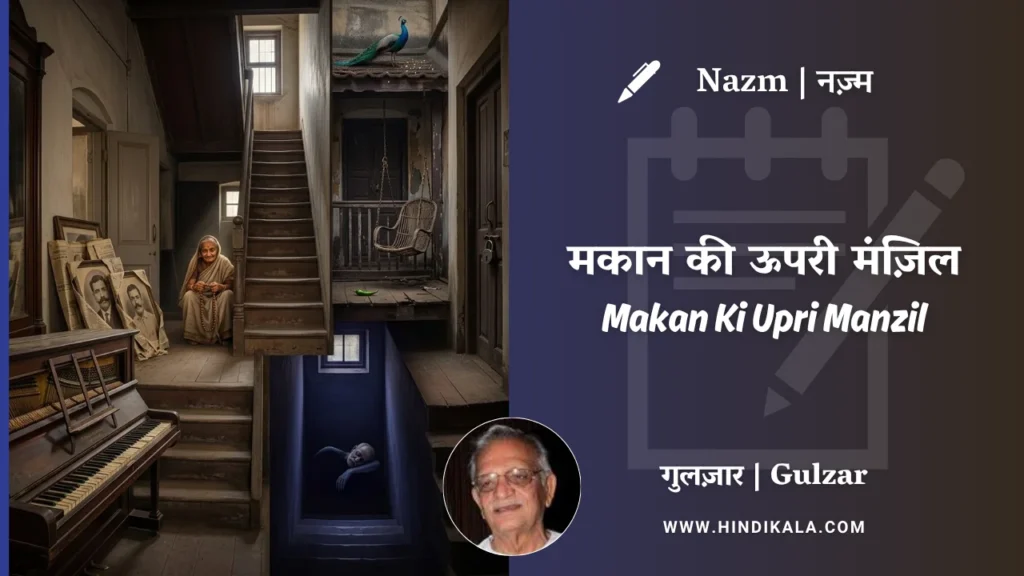
गुलज़ार साहब की यह नज़्म ‘मकान की ऊपरी मंज़िल पर अब कोई नहीं रहता’ यादों, अकेलेपन और पीढ़ियों के बदलते दौर का एक बेहद गहरा और भावुक चित्रण है। इस नज़्म में एक पुराना मकान केवल ईंट-पत्थरों का ढांचा नहीं, बल्कि अतीत और वर्तमान के बीच का पुल है। ऊपरी मंज़िल पर बंद कमरे, पुराना झूला, तोता और मोर गुज़रे हुए बचपन और सुनहरे दौर के प्रतीक हैं, जिन्हें आज की पीढ़ी ने नहीं देखा। कविता में पुरखों की तस्वीरों का हटना और पोतों का विदेशी अंदाज़ पुरानी परंपराओं के टूटने और आधुनिकता के आने को दर्शाता है। अंत में, तहखाने की शांति और सुकून जीवन के अंतिम पड़ाव और चिर-निद्रा की इच्छा को बड़ी खूबसूरती से बयां करते हैं।
गुलज़ार की कविता मकान की ऊपरी मंज़िल
मकान की ऊपरी मंज़िल पर अब कोई नहीं रहता
वो कमरे बंद हैं कबसे
जो 24 सीढियां जो उन तक पहुँचती थी, अब ऊपर नहीं जाती
मकान की ऊपरी मंज़िल पर अब कोई नहीं रहता
वहाँ कमरों में, इतना याद है मुझको
खिलौने एक पुरानी टोकरी में भर के रखे थे
बहुत से तो उठाने, फेंकने, रखने में चूरा हो गए
वहाँ एक बालकनी भी थी, जहां एक बेंत का झूला लटकता था.
मेरा एक दोस्त था, तोता, वो रोज़ आता था
उसको एक हरी मिर्ची खिलाता था
उसी के सामने एक छत थी, जहाँ पर
एक मोर बैठा आसमां पर रात भर
मीठे सितारे चुगता रहता था
मेरे बच्चों ने वो देखा नहीं,
वो नीचे की मंजिल पे रहते हैं
जहाँ पर पियानो रखा है, पुराने पारसी स्टाइल का
फ्रेज़र से ख़रीदा था, मगर कुछ बेसुरी आवाजें करता है
के उसकी रीड्स सारी हिल गयी हैं, सुरों के ऊपर दूसरे सुर चढ़ गए हैं
उसी मंज़िल पे एक पुश्तैनी बैठक थी
जहाँ पुरखों की तसवीरें लटकती थी
मैं सीधा करता रहता था, हवा फिर टेढा कर जाती
बहू को मूछों वाले सारे पुरखे क्लीशे [Cliche] लगते थे
मेरे बच्चों ने आखिर उनको कीलों से उतारा, पुराने न्यूज़ पेपर में
उन्हें महफूज़ कर के रख दिया था
मेरा भांजा ले जाता है फिल्मो में
कभी सेट पर लगाता है, किराया मिलता है उनसे
मेरी मंज़िल पे मेरे सामने
मेहमानखाना है, मेरे पोते कभी
अमरीका से आये तो रुकते हैं
अलग साइज़ में आते हैं वो जितनी बार आते
हैं, ख़ुदा जाने वही आते हैं या
हर बार कोई दूसरा आता है
वो एक कमरा जो पीछे की तरफ बंद
है, जहाँ बत्ती नहीं जलती, वहाँ एक
रोज़री रखी है, वो उससे महकता है,
वहां वो दाई रहती थी कि जिसने
तीनों बच्चों को बड़ा करने में
अपनी उम्र दे दी थी, मरी तो मैंने
दफनाया नहीं, महफूज़ करके रख दिया उसको.
और उसके बाद एक दो सीढिया हैं,
नीचे तहखाने में जाती हैं,
जहाँ ख़ामोशी रोशन है, सुकून
सोया हुआ है, बस इतनी सी पहलू में
जगह रख कर, के जब मैं सीढियों
से नीचे आऊँ तो उसी के पहलू
में बाज़ू पे सर रख कर सो जाऊँ
मकान की ऊपरी मंज़िल पर कोई नहीं रहता…
Gulzar Hindi Poem Makan Ki Upri Manzil Meaning (English Translation)
Makaan Ki Oopri Manzil Par Ab Koi Nahi Rehta
(No one resides on the upper floor of the house anymore)
Woh Kamre Band Hain Kabse
Jo 24 Seedhiyan Jo Un Tak Pahunchti Thi, Ab Oopar Nahi Jaati
(Those rooms have been locked for God knows how long,
The twenty-four steps that once climbed up to them, no longer lead anywhere above.)
Makaan Ki Oopri Manzil Par Ab Koi Nahi Rehta
Wahan Kamron Mein, Itna Yaad Hai Mujhko
Khilone Ek Puraani Tokri Mein Bhar Ke Rakhe The
Bahut Se To Uthaane, Fenkne, Rakhne Mein Choora Ho Gaye
(No one resides on the upper floor of the house anymore,
Deep within those rooms, this much I vividly remember—
Toys were kept piled up inside an old wicker basket,
Many of them turned to dust and crumbled away just by being lifted, discarded, or moved around.)
Makaan Ki Upri Manzil Poem by Gulzar
Wahan Ek Balcony Bhi Thi, Jahaan Ek Bent Ka Jhoola Latakta Tha.
Mera Ek Dost Tha, Tota, Wo Roz Aata Tha
Usko Ek Hari Mirchi Khilaata Tha
(There used to be a balcony there too, where a cane swing hung suspended,
I had a dear friend, a parrot, who would visit me every single day,
And I would fondly feed him a single green chili.)
Usi Ke Saamne Ek Chhat Thi, Jahaan Par
Ek Mor Baitha Aasmaan Par Raat Bhar
Meethe Sitaare Chugta Rehta Tha
(Right in front of it lay an open terrace, where
A majestic peacock would sit all through the night beneath the open sky,
Gently pecking at the sweet, glittering stars as if they were grains.)
Mere Bacchon Ne Wo Dekha Nahi,
Wo Neeche Ki Manzil Pe Rehte Hain
Jahaan Par Piano Rakha Hai, Puraane Parsi Style Ka
Fraser Se Khareeda Tha, Magar Kuch Besuri Aawazein Karta Hai
Ke Uski Reeds Saari Hil Gayi Hain, Suron Ke Oopar Doosre Sur Chadh Gaye Hain
(My children never got to witness any of that,
They live entirely on the ground floor below,
Where an old Parsi-style piano sits in a corner,
Bought long ago from Fraser, but now it only makes discordant, tuneless noises—
For all its internal reeds have loosened, and its notes clumsily overlap one another.)
Gulzar Makaan Ki Upri Manzil Poem Meaning
Usi Manzil Pe Ek Pushtaini Baithak Thi
Jahaan Purkhon Ki Tasveerein Latakti Thi
Main Seedha Karta Rehta Tha, Hawa Phir Tedha Kar Jaati
(On that very same floor was our ancestral living room,
Where portraits of our forefathers used to hang upon the walls;
I would constantly straighten them up, but the passing wind would tilt them askew again.)
Bahu Ko Moonchhon Wale Saare Purkhe Cliche Lagte The
Mere Bacchon Ne Aakhir Unko Keelon Se Utaara, Puraane News Paper Mein
Unhein Mahfooz Kar Ke Rakh Diya Tha
Mera Bhaanja Le Jaata Hai Filmo Mein
Kabhi Set Par Lagaata Hai, Kiraya Milta Hai Unse
(To my daughter-in-law, those mustachioed ancestors seemed nothing but a cliché,
So my children eventually pulled them down from their nails, wrapped them up in old newspapers,
And stored them away safely in the dark;
Now my nephew takes them away for use in the movies,
Sometimes placing them on film sets, and we receive a rent for them.)
Meri Manzil Pe Mere Saamne
Mehmaankhana Hai, Mere Pote Kabhi
Amrika Se Aaye To Rukte Hain
Alag Size Mein Aate Hain Wo Jitni Baar Aate
Hain, Khuda Jaane Wahi Aate Hain Ya
Har Baar Koi Doosra Aata Hain
(On my own floor, right across from me,
Is the guest house, where my grandchildren stay whenever
They visit from America;
They arrive in entirely different sizes each time they appear,
God alone knows if they are the very same children,
Or if a completely different person arrives every single time.)
Makaan Ki Upri Manzil Meaning
Woh Ek Kamra Jo Peechhe Ki Taraf Band
Hai, Jahaan Batti Nahi Jalti, Wahan Ek
Rosary Rakhi Hai, Wo Usse Mahakta Hai,
Wahan Wo Daai Rehti Thi Ki Jisne
Teenon Bacchon Ko Bada Karne Mein
Apni Umr De Di थी, Mari To Maine
Dafnaaya Nahi, Mahfooz Karke Rakh Diya Usko.
(That one room which remains locked at the very back,
Where no light ever burns—a holy rosary lies inside, filling it with a sacred fragrance;
That is where the old nanny used to live, she who
In raising my three children into adulthood
Spent her entire lifetime; when she passed away, I did not bury her,
Instead, I preserved her memory safely within my heart.)
Aur Uske Baad Ek Do Seedhiya Hain,
Neeche Tehkhaane Mein Jaati Hain,
Jahaan Khaamoshi Roshan Hai, Sukoon
Soya Hua Hai, Bas Itni Si Pehlu Mein
Jagah Rakh Kar, Ke Jab Main Seedhiyon
Se Neeche Aaoon To Usi Ke Pehlu
Mein Baazu Pe Sar Rakh Kar So Jaoon
(And just beyond that are a couple of small steps,
Leading straight down into the subterranean basement,
Where silence glows softly, and an absolute peace
Lies fast asleep; keeping just a tiny bit of space reserved right beside it,
So that whenever I finally walk down those stairs,
I can quietly lie down in its embrace,
Rest my weary head upon its arm, and drift off to sleep.)
Makaan Ki Oopri Manzil Par Koi Nahi Rehta…
(No one resides on the upper floor of the house anymore…)
You Might Also Like
- Gulzar Triveni Poems in Hindi & English with Meaning (English Translation) | गुलज़ार – त्रिवेणियाँ

- Gulzar Poem Hindustan Mein Do Do Hindustan Dikhai Dete Hain in Hindi & English with Meaning (English Translation) | गुलज़ार – हिंदुस्तान में दो दो हिंदुस्तान दिखाई देते हैं
- Gulzar Poem Har Baat Pe Hairaan Hai Moorakh Hai Ye Naadaan Hai in Hindi & English with Meaning (English Translation) | गुलज़ार – हर बात पे हैरां है मूरख है ये नादां है
- Gulzar Poem Humein Pedon Ki Poshaakon Se in Hindi & English with Meaning (English Translation) | गुलज़ार – हमें पेड़ों की पोशाकों से
- Gulzar Poem Humdum in Hindi & English with Meaning (English Translation) | गुलज़ार – हमदम




Tags: