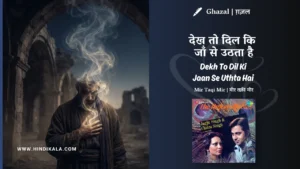
Jagjit Singh Dekh To Dil Ki Jaan Se Uthta Hai Ghazal Lyrics Meaning (English Translation) | Mir Taqi Mir | देख तो दिल कि जाँ से उठता है
Jagjit Singh’s Dekh To Dil Ki Jaan Se Uthta Hai Ghazal Lyrics in Hindi & English with meaning (Translation). The Ghazal is written by Mir Taqi Mir and it’s from the album The Unforgettables (1977).
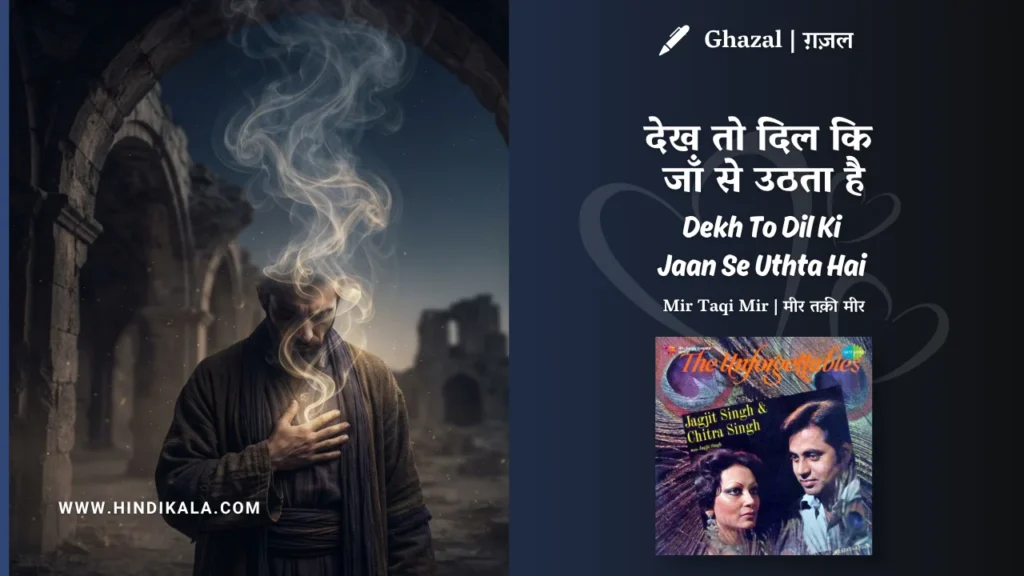
| Ghazal | Dekh To Dil Ki Jaan Se Uthta Hai |
| Album | The Unforgettables (1977) |
| Singer | Jagjit Singh |
| Music | Jagjit Singh |
| Lyricist | Mir Taqi Mir |
| Actors | NA |
मीर तक़ी मीर की यह ग़ज़ल दर्द की गहराई को सादे शब्दों में उठाती है। पहले ही शेर में शायर पूछता है कि यह धुआँ दिल से उठ रहा है या जान से। वह कहता है कि आसमान किसी दिलजले की क़ब्र है जहाँ से हर सुबह शोला उठता है। महबूब की गली से वे ऐसे उठे जैसे कोई दुनिया से उठता है। आख़िर में वह कहता है कि इश्क़ भारी पत्थर है, जिसका बोझ कमज़ोर से कहाँ उठता है। जगजीत सिंह की आवाज़ इसकी कसक को निभाती है।
देख तो दिल कि जाँ से उठता है ग़ज़ल हिन्दी लिरिक्स
देख तो दिल कि जाँ से उठता है
ये धुआँ सा कहाँ से उठता है
गोर किस दिल-जले की है ये फ़लक
शोला इक सुबह याँ से उठता है
(गोर = कब्र), (फ़लक = आसमान)
बैठने कौन दे है फिर उस को
जो तेरे आस्ताँ से उठता है
(आस्ताँ = चौखट)
यूँ उठे आह उस गली से हम
जैसे कोई जहाँ से उठता है
इसी ग़ज़ल के कुछ और अश’आर:
खाना-ऐ-दिल से ज़िन्हार न जा
कोई ऐसे मकाँ से उठता है
(खाना-ऐ-दिल = ह्रदय रुपी घर), (ज़िन्हार = कदापि, हरगिज़, शरण, पनाह)
नाला सर खेंचता है जब मेरा
शोर एक आसमान से उठता है
(नाला = आर्तनाद, रुदन)
लड़ती है उस की चश्म-ऐ-शोख जहाँ
इक आशोब वां से उठता है
(चश्म-ऐ-शोख = सुन्दर आँखें), (आशोब = हलचल, उथल-पुथल)
सुध ले घर की भी शोला-ऐ-आवाज़
दूद कुछ आशियाँ से उठता है
(दूद = धुआँ )
Mir Taqi Mir Dekh To Dil Ki Jaan Se Uthta Hai Ghazal in Hindi
इश्क़ इक ‘मीर’ भारी पत्थर है
बोझ कब नातावां से उठता है
(नातावां = अशक्त, निर्बल, कमज़ोर)
इस ग़ज़ल की ख़ास बात रदीफ़ “उठता है” है, जो हर शेर में उठने के नए मायने देता है: धुआँ उठना, शोला उठना, महफ़िल से उठना, दुनिया से उठना, बोझ उठना। चौथा शेर “यूँ उठे आह उस गली से हम, जैसे कोई जहाँ से उठता है” बहुत मशहूर है, और इंडियन लिंक के एक लेख में इसे ग़ालिब के “निकलना ख़ुल्द से आदम का सुनते आए हैं लेकिन” से मिलाकर देखा गया है। फ़िल्म पाकीज़ा (1971) में नौशाद के संगीत में इस ग़ज़ल के दो शेर पहले शेर में बदलाव के साथ लिए गए थे, और 7 ख़ून माफ़ में भी इसकी झलक सुनाई देती है। निदा फ़ाज़ली ने अपनी एक नज़्म में इस पंक्ति की गूँज रखी है। मीर (1722-23 से 1810) को उर्दू के सबसे बड़े शायरों में गिना जाता है, और इसी ग़ज़ल का यह धुआँ कहा जाता है कि बॉलीवुड और लॉलीवुड के गीतकारों को भी बार-बार लौटने पर मजबूर करता है।
This ghazal by Mir Taqi Mir lifts the depth of pain in plain words. In the very first couplet the poet asks whether this smoke rises from the heart or from the soul. He says the sky is the grave of some burnt-hearted lover, from which a flame rises each dawn. He rose from the beloved’s street as though someone were rising from the world. In the end he says love is a heavy stone, and a weakling cannot lift such a burden. Jagjit Singh’s voice carries its ache.
Dekh To Dil Ki Jaan Se Uthta Hai Ghazal Lyrics in English with Meaning (Translation)
Dekh To Dil Ki Jaan Se Uthta Hai
Ye Dhuan Sa Kahan Se Uthta Hai
(See whether it rises from the heart or from the soul:
This smoke, from where does it rise?)
Gor Kis Dil-Jale Ki Hai Ye Falak
Shola Ik Subah Yaan Se Uthta Hai
(Whose grave is this sky, of what heart-burnt lover,
That a flame rises from here each dawn?)
Baithne Kaun De Hai Phir Us Ko
Jo Tere Aastan Se Uthta Hai
(Who lets him sit anywhere again,
He who rises from your threshold?)
Yun Uthe Aah Us Gali Se Hum
Jaise Koi Jahan Se Uthta Hai
(With a sigh we rose from that street,
As though someone were departing the world.)
Dekh To Dil Ki Jaan Se Uthta Hai Ghazal English Translation
Khana-e-Dil Se Zinhaar Na Ja
Koi Aise Makan Se Uthta Hai
(Never, ever leave the house of the heart;
Does anyone rise and leave such a home?)
Nala Sar Khenchta Hai Jab Mera
Shor Ek Aasman Se Uthta Hai
(When my lament raises its head,
An uproar rises from the sky.)
Ladti Hai Us Ki Chashm-e-Shokh Jahan
Ik Aashob Wan Se Uthta Hai
(Wherever her playful eyes lock in battle,
A tumult rises from that very spot.)
Sudh Le Ghar Ki Bhi Shola-e-Awaz
Dood Kuchh Aashiyan Se Uthta Hai
(Look to your own home too, O flame-voiced one;
Some smoke is rising from your nest.)
Ishq Ik ‘Mir’ Bhaari Patthar Hai
Bojh Kab Natawan Se Uthta Hai
(Love, O Mir, is a heavy stone;
How can a weakling lift such a weight?)
The refrain “uthta hai” (“rises”) takes on a new meaning in each couplet: smoke rising, a flame rising, rising from a gathering, rising from the world, a burden being lifted. The fourth couplet, “yun uthe aah us gali se hum, jaise koi jahan se uthta hai”, is especially famous, and an Indian Link article sets it beside Ghalib’s complaint about being turned out of the beloved’s street. The 1971 film Pakeezah used two couplets of this ghazal in Naushad’s music, with a change in the opening couplet, and 7 Khoon Maaf briefly echoes it too. Nida Fazli echoes this line in one of his poems. Mir (1722-23 to 1810) is counted among the greatest Urdu poets, and it is said that lyricists of Bollywood and Lollywood return to this couplet again and again.
FAQs (Frequently Asked Questions)
The Unforgettables (1977)
You Might Also Like:
- Jagjit Singh Dekh To Dil Ki Jaan Se Uthta Hai Ghazal Lyrics Meaning (English Translation) | Mir Taqi Mir | देख तो दिल कि जाँ से उठता है

- Jagjit Singh Dekha To Mera Saaya Bhi Mujhse Juda Mila Ghazal Lyrics Meaning (English Translation) | Ayaz Jhansvi | देखा तो मेरा साया भी मुझ से जुदा मिला
- Jagjit Singh Deewar-O-Dar Pe Naksh Banaane Ka Hai Junoon Ghazal Lyrics Meaning (English Translation) | Abhishek (1987) | दीवार-ओ-दर पे नक़्श बनाने का है जुनून
- Jagjit Singh Darwaze Se Mat Lautao Lautakar Pachtaoge Ghazal Lyrics Meaning (English Translation) | Unknown | दरवाज़े से मत लौटाओ लौटाकर पछताओगे
- Jagjit Singh Dard Se Mera Daaman Bharde Ya Allah Ghazal Lyrics Meaning (English Translation) | Qateel Shifai | दर्द से मेरा दामन भर दे या अल्लाह | Lata Mangeshkar