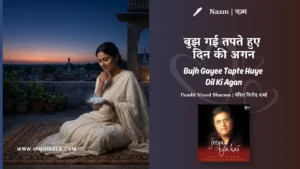
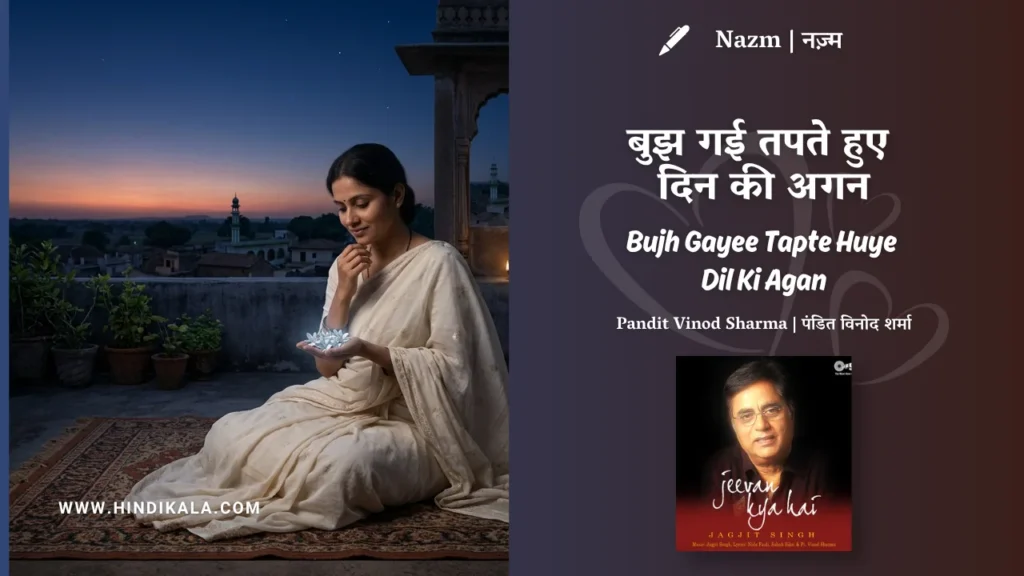
Jagjit Singh Bujh Gayee Tapte Huye Dil Ki Agan Lyrics Meaning (English Translation) | Pandit Vinod Sharma | बुझ गई तपते हुए दिन की अगन
Jagjit Singh’s Bujh Gayee Tapte Huye Dil Ki Agan Lyrics in Hindi & English with meaning (Translation). The Ghazal is written by Pandit Vinod Sharma, and it’s from the album Jeevan Kya Hai (2005).
| Ghazal | Bujh Gayee Tapte Huye Dil Ki Agan |
| Album | Jeevan Kya Hai (2005), Unique (1996) |
| Singer | Jagjit Singh |
| Music | Jagjit Singh |
| Lyricist | Pandit Vinod Sharma |
| Actors | NA |
पंडित विनोद शर्मा का यह गीत ढलती शाम और चाँदनी रात की सुंदर तस्वीर है। दिन की तपन बुझ चुकी है, साँझ ने जलन चुपचाप पी ली है और रात उजला वस्त्र पहनकर झुक आई है। ऐसे में कवि अपने प्राण प्रिय से पूछता है कि तुम चुप क्यों हो, कुछ गुनगुनाओ और चाँदनी के फूल चुनकर मुस्कराओ। आकाश नीली झील-सा है और चाँद खिले कमल-सा। चैत की चंचल हवा में वह बिखरे केश बाँधने, काजल लगाने और माँग भरने को कहता है। जगजीत सिंह की आवाज़ इसे कोमलता देती है।
बुझ गई तपते हुए दिन की अगन गीत हिन्दी लिरिक्स
बुझ गई तपते हुए दिन की अगन
साँझ ने चुपचाप ही पी ली जलन
रात झुक आई पहन उजला वसन (वसन = वस्त्र)
प्राण तुम क्यों मौन हो कुछ गुनगुनाओ
चाँदनी के फूल चुन लो मुस्कराओ
एक नीली झील-सा फैला अचल
आज ये आकाश है कितना सजल
चाँद जैसे रूप का उभरा कमल
रात भर इस रूप का जादू जगाओ
प्राण तुम क्यों मौन हो कुछ गुनगुनाओ
Hindi Lyrics of Bujh Gayee Tapte Huye Dil Ki Agan Song
चल रहा है चैत का चंचल पवन
बाँध लो बिखरे हुए कुन्तल सघन (कुन्तल सघन = घने घुँघराले बाल)
आज लो कजरा उदासे हैं नयन
माँग भर लो भाल पर बिंदिया सजाओ (भाल = माथा)
प्राण तुम क्यों मौन हो कुछ गुनगुनाओ
इस गीत की बनावट बहुत सधी हुई है। हर बंद के अंत में “प्राण तुम क्यों मौन हो कुछ गुनगुनाओ” की टेक लौटती है, मानो प्रकृति का पूरा दृश्य एक ही मनुहार की तरफ़ बढ़ रहा हो। पहले साँझ और रात, फिर आकाश और चाँद, और आख़िर में प्रिया का श्रृंगार, यानी दृष्टि बाहर से भीतर की ओर आती है। तीसरे बंद में महबूबा उदास है, और कवि उसे डाँटता नहीं, काजल, माँग और बिंदिया सजाकर उसे फिर मुस्कराने का न्योता देता है। “प्राण” यहाँ “मेरी जान” या “मेरे जीवन” जैसा संबोधन है। चैत वसंत का महीना है, जब हवा चंचल और रातें सुहानी होती हैं।
This song by Pandit Vinod Sharma is a lovely picture of a fading evening and a moonlit night. The day’s heat has cooled, dusk has quietly drunk down the burning ache, and night has bent low in a gleaming white robe. In such a hush the poet asks his beloved why she is silent, and urges her to hum something, gather the flowers of moonlight and smile. The sky is like a blue lake and the moon like an opened lotus. In Chaitra’s playful breeze he asks her to tie up her tresses, put on kohl and adorn her brow. Jagjit Singh’s voice lends it tenderness.
Bujh Gayee Tapte Huye Dil Ki Agan Lyrics in English with Meaning (Translation)
Bujh Gayi Tapte Hue Din Ki Agan
Saanjh Ne Chupchap Hi Pi Li Jalan
Raat Jhuk Aayi Pehan Ujla Wasan
Pran Tum Kyon Maun Ho Kuch Gungunao
Chandni Ke Phool Chun Lo Muskurao
(The scorching fire of the burning day has died away,
Dusk has quietly drunk down the burning ache,
Night has bent low, clad in a gleaming white robe;
Beloved, why are you silent? Hum me something,
Gather the flowers of moonlight, and smile.)
Ek Neeli Jheel-Sa Faila Achal
Aaj Ye Aakash Hai Kitna Sajal
Chaand Jaise Roop Ka Ubhra Kamal
Raat Bhar Is Roop Ka Jaadu Jagao
Pran Tum Kyon Maun Ho Kuch Gungunao
(Spread out like a still, blue lake,
How moist and shimmering the sky is tonight!
The moon, like a lotus of beauty newly risen;
Awaken this beauty’s magic all night long;
Beloved, why are you silent? Hum me something.)
Bujh Gayee Tapte Huye Dil Ki Agan Lyrics English Translation
Chal Raha Hai Chait Ka Chanchal Pawan
Baandh Lo Bikhre Hue Kuntal Saghan
Aaj Lo Kajra Udase Hain Nayan
Maang Bhar Lo Bhaal Par Bindiya Sajao
Pran Tum Kyon Maun Ho Kuch Gungunao
(The playful breeze of Chaitra is blowing,
Tie up your scattered, heavy tresses;
Take up the kohl tonight, for your eyes are sorrowful;
Fill your parting with vermilion, set the bindi on your brow;
Beloved, why are you silent? Hum me something.)
The song is carefully built. The refrain “Pran tum kyon maun ho kuch gungunao” returns at the end of each stanza, as though the whole natural scene were moving towards one gentle plea. First come dusk and night, then sky and moon, and finally the beloved’s adornment, so the gaze moves from the outer world to the inner one. In the third stanza the beloved is sad, and the poet does not scold her. He coaxes her back to a smile with kohl, vermilion and a bindi. “Pran” here is an endearment like “my life”. Chaitra is the spring month, when the breeze turns playful and the nights lovely.
FAQs (Frequently Asked Questions)
Pandit Vinod Sharma | पंडित विनोद शर्मा
Jeevan Kya Hai (2005)
You Might Also Like:
- Jagjit Singh Chaahi Thi Dil Ne Tujhse Wafaa Kam Bahut Hi Kam Ghazal Lyrics Meaning (English Translation) | Mehboob Khizaan | चाही थी दिल ने तुझसे वफ़ा कम बहुत ही कम

- Jagjit Singh Bujh Gayee Tapte Huye Dil Ki Agan Lyrics Meaning (English Translation) | Pandit Vinod Sharma | बुझ गई तपते हुए दिन की अगन
- Jagjit Singh Bol Ik-Taare Jhan Jhan Jhan Jhan Lyrics Meaning (English Translation) | Josh Malihabadi | बोल इकतारे झन झन झन झन
- Jagjit Singh Bhool Jaana Use Bhula Dena Nazm Lyrics Meaning (English Translation) | Makarand Deshpande | भूल जाना उसे भुला देना
- Jagjit Singh Bezubani Jubaan Na Ho Jaye Ghazal Lyrics Meaning (English Translation) | Hafeez Jalandhari | बेज़ुबानी ज़ुबाँ न हो जाये