Gulzar Poetry Khumani Akhrot in Hindi & English with Meaning (English Translation) | गुलज़ार – खुमानी, अखरोट
Hindi Kala presents Gulzar Poetry Khumani Akhrot | खुमानी, अखरोट about Apricot and Walnut trees in Hindi & English with the poem’s Meaning (English Translation).
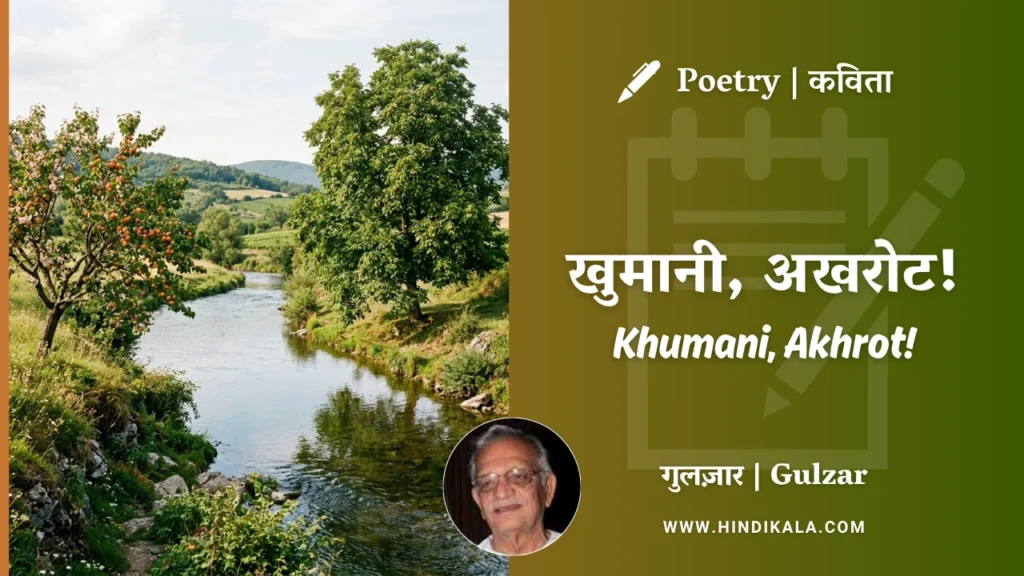
गुलज़ार साहब की यह कविता ‘ख़ुमानी’ (Khumani/Apricot) और ‘अख़रोट’ (Akhrot/Walnut) के रूप में दो पात्रों के माध्यम से प्रेम, साहचर्य और त्रासदी की एक मार्मिक कहानी बुनती है। दोनों नदी के किनारे खुशी-खुशी साथ रहते थे और पानी में बेफिक्र होकर तैरते थे। अख़रोट, जो थोड़ा ऊँचा और सतर्क था, वह अक्सर ख़ुमानी को नदी के ख़तरनाक भँवरों से दूर रहने की चेतावनी देता था। लेकिन एक शाम भीषण बाढ़ आई और एक निर्दयी भँवर ख़ुमानी को बहा ले गया। ख़ुमानी के खो जाने के बाद, अख़रोट अकेला और टूट गया है। वह दुखी होकर नदी की ओर देखता रहता है और सदमे में उसका अक़्स (Reflection) भी पानी में नज़र आना बंद हो गया है। यह कविता जुदाई और गहरी उदासी को बहुत ही ख़ूबसूरती और सादगी से बयाँ करती है।
गुलज़ार की कविता खुमानी, अखरोट
ख़ुमानी, अख़रोट बहुत दिन पास रहे थे
दोनों के जब अक़्स पड़ा करते थे बहते दरिया में,
पेड़ों की पोशाकें छोड़के,
नंग-धड़ंग दोनों दिन भर पानी में तैरा करते थे
कभी-कभी तो पार का छोर भी छू आते थे
ख़ुमानी मोटी थी और अख़रोट का क़द कुछ ऊँचा था
भँवर कोई पीछे पड़ जाए, तो पत्थर की आड़ से होकर,
अख़रोट का हाथ पकड़ के वापस भाग आती थी।
अख़रोट बहुत समझाता था,
“देख ख़ुमानी, भँवर के चक्कर में मत पड़ना,
पाँव तले की मिट्टी खेंच लिया करता है।”
इक शाम बहुत पानी आया तुग़यानी का,
और एक भँवर…
ख़ुमानी को पाँव से उठाकर, तुग़यानी में कूद गया।
अख़रोट अब भी उस जानिब देखा करता है,
जिस जानिब दरिया बहता है।
अख़रोट का क़द कुछ सहम गया है
उसका अक़्स नहीं पड़ता अब पानी में!
Gulzar Hindi Poetry Khumani Akhrot Meaning (English Translation)
Khumani, Akhrot Bahut Din Paas Rahe The
Dono Ke Jab Aqs Pada Karte The Bahte Dariya Mein,
Pedo Ki Poshaken Chhod Ke,
Nang-Dhadang Dono Din Bhar Paani Mein Taira Karte The
Kabhi-Kabhi To Paar Ka Chhhor Bhi Chhu Aate The
(Apricot and Walnut were companions, long and close,
Their reflections rippled together in the flowing river’s prose,
Having shed the garments that their patient trees had sewn,
They swam all day, unclothed, unbound, in the water’s undertone —
Sometimes daring to touch the far shore, and then back home.)
Khumani Moti Thi Aur Akhrot Ka Qad Kuch Uncha Tha
Bhanwar Koi Peeche Pad Jaaye, To Patthar Ki Aad Se Ho Kar,
Akhrot Ka Haath Pakad Ke Waapas Bhaag Aati Thi.
(Apricot was round and full, the Walnut stood a little tall,
If a whirlpool gave chase, she’d duck behind a stone on the wall,
Clutching the Walnut’s hand, she’d laugh and run from the fall.)
Gulzar Khumani Akhrot Poem’s Meaning
Akhrot Bahut Samjhaata Tha,
“Dekh Khumani, Bhanwar Ke Chakkar Mein Mat Padna,
Paanw Tale Ki Mitti Kheench Liya Karta Hai.”
(The Walnut would often warn, with patience deep and old,
“Listen, Apricot, don’t let the whirlpool make you bold,
It steals the very ground beneath your feet — that’s what I’ve been told.”)
Ik Shaam Bahut Paani Aaya Tugyyani Ka,
Aur Ek Bhanwar…
Khumani Ko Paanw Se Utha Kar, Tugyyani Mein Kood Gaya.
(One evening the flood arrived with furious, raging might,
And a whirlpool — without warning —
Lifted Apricot from her feet, and plunged into the night.)
Akhrot Ab Bhi Us Jaanib Dekha Karta Hai,
Jis Jaanib Dariya Bahta Hai.
Akhrot Ka Qad Kuch Saham Gaya Hai —
Uska Aqs Nahin Padta Ab Paani Mein!
(Walnut still keeps looking in that direction,
The direction in which the river flows away.
Walnut’s stature has shrunken a little, cowered in fear;
His reflection no longer appears in the water now!)
You Might Also Like
- Gulzar Triveni Poems in Hindi & English with Meaning (English Translation) | गुलज़ार – त्रिवेणियाँ

- Gulzar Poem Hindustan Mein Do Do Hindustan Dikhai Dete Hain in Hindi & English with Meaning (English Translation) | गुलज़ार – हिंदुस्तान में दो दो हिंदुस्तान दिखाई देते हैं
- Gulzar Poem Har Baat Pe Hairaan Hai Moorakh Hai Ye Naadaan Hai in Hindi & English with Meaning (English Translation) | गुलज़ार – हर बात पे हैरां है मूरख है ये नादां है
- Gulzar Poem Humein Pedon Ki Poshaakon Se in Hindi & English with Meaning (English Translation) | गुलज़ार – हमें पेड़ों की पोशाकों से
- Gulzar Poem Humdum in Hindi & English with Meaning (English Translation) | गुलज़ार – हमदम


Tags: